These Poses Could Make You Put Down the Pain Relievers

Achy back? Give yoga a go. Numerous studies have shown the power of the ancient practice, which emphasizes stretching, strength, and flexibility, to relieve back soreness and improve function.
Yoga may potentially help lessen the need for pain medication, according to research that was published in July 2017 in the Annals of Internal Medicine. Seventy percent of the participants were taking medication at the beginning of the three-month trial, in which one group was assigned to physical therapy for their back pain, another to yoga, and a third to reading about pain management techniques.
By the end, however, only 50% of the participants in the yoga and physical therapy groups were still taking medicine, while the majority in the reading group continued to take it.
According to Jennifer Bayliss, a fitness expert in Williamstown, Massachusetts, yoga is not recommended if you have severe pain, but those with occasional soreness or chronic aches may benefit greatly from certain postures that can help lengthen your spine, stretch and strengthen your muscles, and return your back to its proper alignment.
Your body is encouraged to build defenses against the causes of back pain, which include weak abdominal and pelvic muscles as well as a lack of hip flexibility, by yoga’s emphasis on balance and steadiness. By improving your posture and strengthening these muscles, you can lessen the strain on your back, which can lessen the pain you experience. Stretching also improves flexibility by allowing more blood to reach contracted muscles.
Additionally, scientists are beginning to understand how yoga’s impact on the brain may lessen pain. The brains of people with chronic pain and frequent yoga practitioners differed significantly, according to a study by the National Institutes of Health that was published in May 2015 in Frontiers in Human Neuroscience.
People who practiced yoga had more of the type of brain tissue that helps us tolerate pain compared to those who had chronic pain, which implies that yoga may be both physically and neurologically protective.
Before beginning a new exercise routine, it is always a good idea to consult your doctor, especially if you are prone to pain. When you’re given the all-clear, try these seven calming positions for your back. These poses can be performed in any order. Hold them for longer periods of time to gradually increase the intensity. Additionally, yoga has been shown to improve sleep quality, lower blood pressure, drop heart rate, and lessen symptoms of worry and despair.
Downward-Facing Dog Will Stretch Your Hamstrings

The huge muscles that assist create your lower back, support your spine, and enable you to stand and move objects, known as back extensors, are the focus of this traditional yoga pose, which provides an excellent total-body stretch.
Try it: Start by getting down on your knees and placing your hands just in front of your shoulders. By pressing back, pull your tailbone up and toward the ceiling while separating your knees from the ground. Pushing your heels toward the floor can help to stretch your hamstrings even more. Five to ten breaths should be held in the stance before repeating it five to seven times.
Child’s Pose Elongates Your Back and Relieves Stress

Even though it appears that you are relaxing, the child’s pose is actually an active stretch that lengthens the back. After a long, exhausting day, it’s also a fantastic stress reliever before bed.
Try it: Begin by getting down on all fours with your arms extended straight in front of you. Then, sit back so that your glutes (butt muscles) rest just above, but not in contact with, your heels. For a good, relaxing stretch, hold the position for 5 to 10 breaths and then repeat as necessary.
Pigeon Pose Relaxes Hips By Stretching Rotators

The pigeon position stretches the hip rotators and flexors, albeit it might be a little difficult for beginners. Although it may not seem like the most logical position to relieve back pain, tight hips might actually exacerbate lower back pain.
Try it: Start with your feet together in the downward-facing dog position. Then, bend your left leg so that it is almost perpendicular to your right leg, and bring your left knee forward and out to the left. Lower both legs to the ground. Only experienced Pigeon posers should lift their rear foot off the ground and inward toward their backs for an added hamstring stretch. Alternatively, you can simply keep your back right leg straight behind you. 5 to 10 breaths in, hold the posture, then change
Triangle Pose Lengthens Torso Muscles to Build Strength

Triangle posture can expand your torso’s side muscles and stretch the muscle fibers along your outside hip while also strengthening your back and legs (your IT, or iliotibial, band).
Try it: Set up a straight stance with your feet close together. After that, lunge back three to four feet with your left foot while angling it outward at a 45-degree angle. While maintaining the straight right and left legs, tilt your chest to the side and open the posture by reaching your right arm toward the floor and your left arm toward the ceiling. Don’t overextend; merely stoop as much as you can while keeping your right arm as close to the ground as you can at first.
Cat and Cow Pose Loosen the Back and Warm You Up

Cow and Cat stretches, whether done as a part of a yoga regimen or as a warm-up for another workout, are the ideal poses for a stiff, painful back.
Try it: Beginning on all fours, steadily press your spine up and arch your back to enter Cat posture. After a brief period of holding, switch to the Cow position by elevating your head, tucking your tailbone, and pulling your shoulder blades back. Your spine is helped to shift from Cat to Cow, placing it in a neutral posture and allowing your muscles to relax and relieve stress.
Repeat ten times, gracefully transitioning from Cat to Cow and back to Cat. As necessary, repeat the sequence.
An Upward Forward Bend Releases Tight Hamstring and Back Muscles

The upward front bend, also known as a forward fold, releases tight, tense shoulders while stretching the hamstrings and back muscles.
Try it: With your feet, shoulder-width apart, and your knees lose but not locked, stand erect. Exhale and lean forward, bending at the waist, reaching for the floor. If at first, you are unable to reach the floor all the way, stop where your hamstrings feel stretched comfortably. Five to seven times, repeat the stance. Hold the position for 5–10 breaths after the final bend.
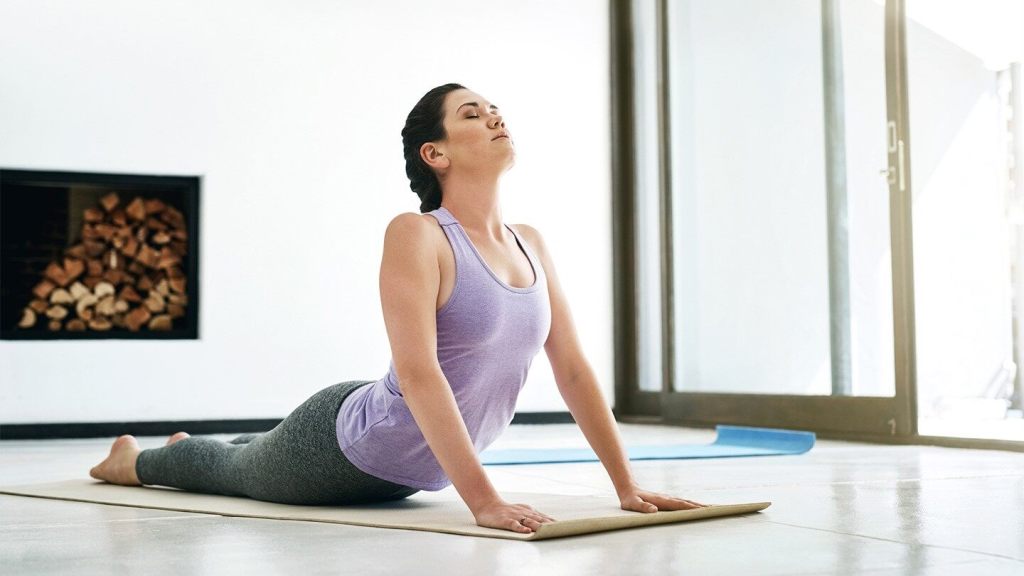
Upward-Facing Dog Stretches and Engages Key Muscles

Getty Images
Your chest will open up, your abdominal muscles will expand, and your back will become more active in this pose.
Try it: Laying down on the ground with your palms facing down by the middle of your ribs is a good place to start. Use your back strength, not your hands, to lift your chest off the floor while drawing your legs together and driving the tops of your feet into the ground. At the start, keep your legs straight out in front of you. Repeat as necessary. Hold the position for 5 to 10 breaths.
Read More About The 10 Yoga Poses You Should Do Everyday
Read More About 9 Yoga Asanas Poses to Help You Lose Weight Fast
Read More About Different Types of Yoga Asanas with Their Benefits to Your Body
 YOGA
YOGA 